“The faith of the Romanian people is as old as the Romanian people themselves.”
— Romanian Orthodox Tradition
The Apostolic Roots of Romanian Christianity
The story of the Romanian Orthodox Parish of Malta does not begin in Valletta. It begins two thousand years ago, on the shores of the Black Sea.
According to the ancient tradition of the Romanian Orthodox Church — supported by the Church History of Eusebius of Caesarea — it was Saint Andrew the Apostle, the First-Called among the Twelve, who first brought the light of the Gospel to the Geto-Dacian ancestors of the Romanian people. He is said to have preached in the province of Dobruja (Scythia Minor), sheltering in a cave near what is today the village of Ion Corvin in Constanța County, where he performed baptisms in the surrounding springs and brought many Dacians to faith in Christ. For this reason, Saint Andrew is venerated as the Patron and Apostle of Romania — and his feast day is both a national and a Church holiday across the Romanian lands.
This apostolic origin sets the Romanian Orthodox faith apart: it was not a faith brought by conquest or decree, but one sown into the very soul of a people at the dawn of Christianity itself.
Christianity Shaped by Rome and Byzantium
The Romanian people are the only predominantly Orthodox nation in the world to speak a Romance language — a living testament to the fusion of Dacian and Roman civilizations forged in the 2nd century AD. While their Latin tongue connects them to the western heritage of Rome, their faith connects them deeply to the eastern heritage of Byzantium.
As the great Christian Empire of Constantinople shaped the theology, liturgy, and iconographic tradition of the Orthodox East, the Romanian lands — Wallachia, Moldavia, and Transylvania — became faithful guardians of that heritage across centuries of turbulent history. Romanian monasteries, princes, and hierarchs preserved Orthodox faith and culture even under Ottoman pressure, and Romanian rulers became great benefactors of the entire Orthodox world, supporting monasteries on Mount Athos, Jerusalem, and Constantinople itself.
The Birth of an Autocephalous Church
For centuries, Romanian Orthodox life was organized under the spiritual authority of the Ecumenical Patriarchate of Constantinople. It was only with the political unification of the Romanian principalities and the recognition of Romanian independence in 1878 that the Church moved toward full ecclesiastical self-governance.
On April 25, 1885, Ecumenical Patriarch Joachim IV issued the Tomos of Autocephaly, formally recognizing the Romanian Orthodox Church as an autocephalous — fully self-governing — Church within the communion of world Orthodoxy. This was not a rupture, but a coming of age: the natural fruit of a Church that had long governed its own affairs and now received the formal blessing of the ancient See of Constantinople.
Forty years later, on February 25, 1925, the Romanian Orthodox Church was elevated to a Patriarchate — the ninth in the Orthodox world — with the Archbishop of Bucharest bearing the title of Patriarch. Today, the Romanian Orthodox Church is one of the largest Orthodox Churches in the world, with approximately 85% of Romania’s 16 million people belonging to her, as well as some 720,000 Moldovans.
Uniquely among all Orthodox Churches, she is the only autocephalous Church to use a Romance language — Romanian — in her liturgical life.
Following the Faithful into the World
Throughout the 20th century, waves of Romanian emigration — driven first by war, then by communist oppression, and finally by the freedom that came after 1989 — carried the faithful far beyond the borders of Romania. Wherever Romanians settled, they sought to bring their faith with them.
The Romanian Orthodox diaspora in Western Europe has deep roots: the first Romanian chapel in Paris was established as early as 1853. But it was after the fall of communism in 1989 that the diaspora truly expanded. Hundreds of thousands of Romanians settled across Western Europe — in Germany, France, Italy, Spain, the United Kingdom, and beyond — and the Church followed her faithful, establishing new dioceses, parishes, and mission communities wherever they gathered.
Under Patriarch Daniel, the Church accelerated this mission significantly. New dioceses were established in 2007 for Australia and New Zealand, Spain and Portugal, and Northern Europe. Romanian Orthodox parishes now exist on virtually every continent — from Japan to South Africa to the United Arab Emirates — as the Church lives out her calling to be a mother to every Romanian, wherever in the world they may find themselves.
The Parish of Malta is part of this great living tradition — one link in an unbroken chain stretching from the cave of Saint Andrew in Dobruja to the streets of Valletta.
The Romanian Community Comes to Malta
Romanians began settling in Malta in significant numbers in the early 2000s, drawn by the island’s growing economy, warm Mediterranean character, and membership in the European Union. Today, approximately 2,000 Romanians and 500 Moldovans call Malta home — a small but lively diaspora community sharing a language, a culture, and a faith.
For many years, the faithful in Malta had limited access to regular liturgical life. Services were held occasionally, but the community lacked a permanent pastor and a permanent home.
The Founding of Our Parish
Everything changed with the arrival of Fr. George Alexandru Popescu. Fr. George first came to Malta on holiday, accompanied by his wife and daughter. Something drew him back. On his return, he discovered that the Romanian community had no one to lead them spiritually — and he answered the call, emigrating to Malta as an Orthodox missionary priest.
The parish was officially established in 2014, giving the Romanian and Moldovan faithful of Malta a canonical home under the Diocese of Italy, within the Metropolis of Western and Southern Europe, under the Patriarchate of Romania.
After a period of re-establishment, regular Sunday services resumed in 2019 — attended at first by only three, four, or five people. Through patient pastoral care, word of mouth, and the grace of God, the community has grown steadily. Today, approximately 70 faithful gather every Sunday for Divine Liturgy, and the number continues to grow.
A Home in the Heart of Valletta
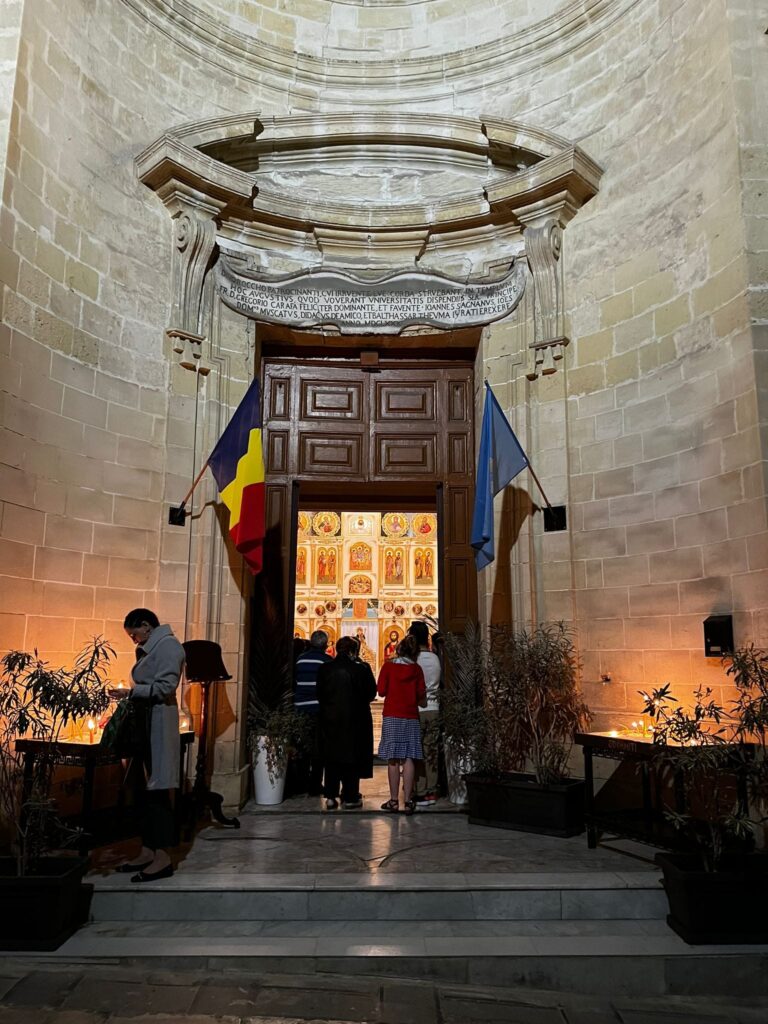
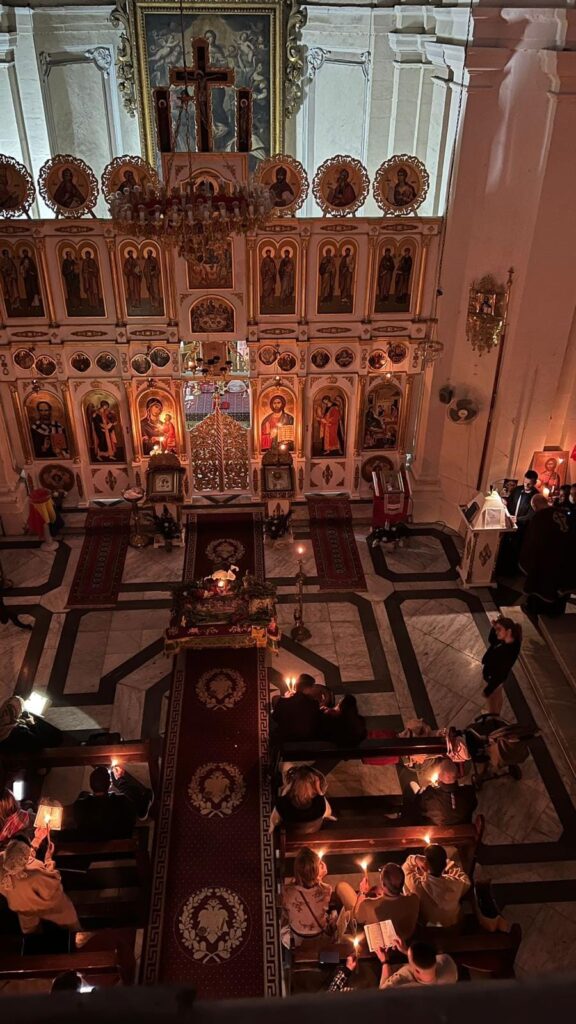
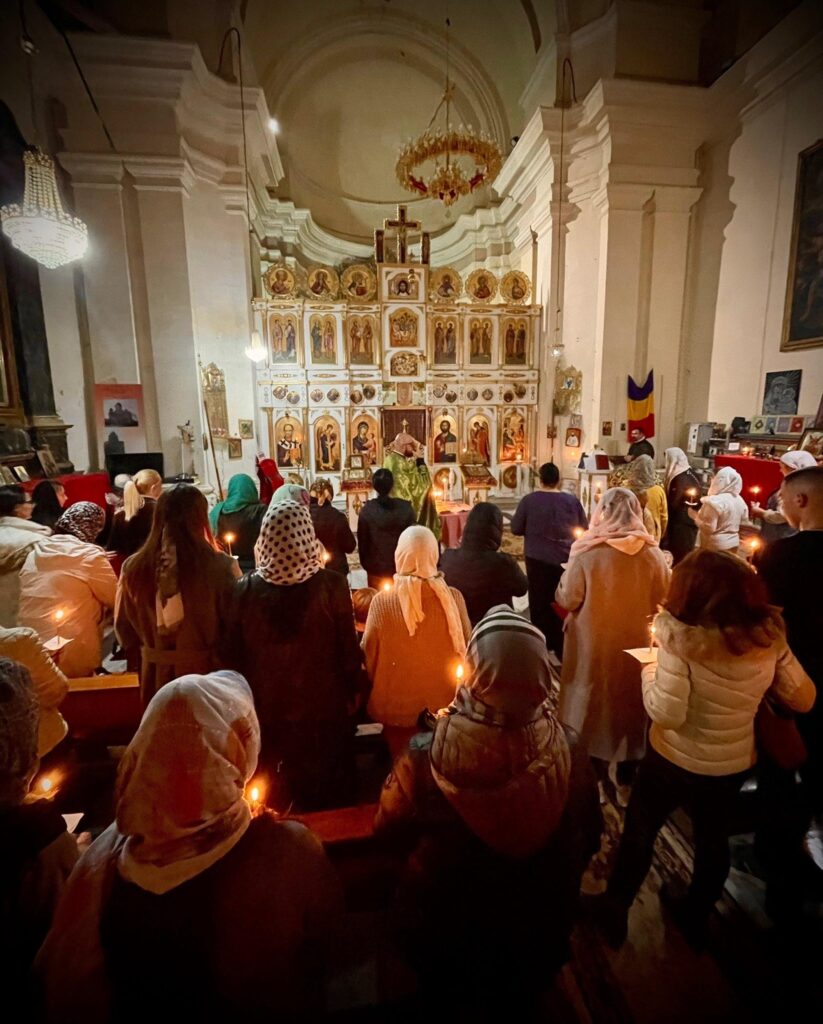
One of the great blessings of this parish has been the generosity of the Roman Catholic Archdiocese of Malta, which offered the use of St. Roque’s Church (Knisja ta’ San Rokku) on St. Ursula Street, Valletta — entirely free of charge. This 17th-century Baroque church, built in the heart of Malta’s UNESCO-listed capital, now resounds on Sunday mornings with the ancient chants of the Orthodox liturgical tradition, sung in Romanian and English.
Fr. George has reflected on this gift with deep gratitude:
“Here we are blessed because the Archdiocese of Malta has offered us free of charge St. Roque’s Church in St. Ursula Street, Valletta. The Maltese Church has been very supportive… every time we encounter any problem we have always received total support.”
This spirit of brotherhood between the Catholic and Orthodox traditions in Malta is itself a sign of the times — a living witness that Christian unity, however long in coming, is already being built, one gesture of generosity at a time.
Building Bridges Today
The Romanian Orthodox Parish of Malta is not only a place of worship — it is a bridge. Fr. George was elected Chairman of the “Christians Together” Commission in Malta, working alongside other Christian denominations to promote unity, dialogue, and mutual understanding.
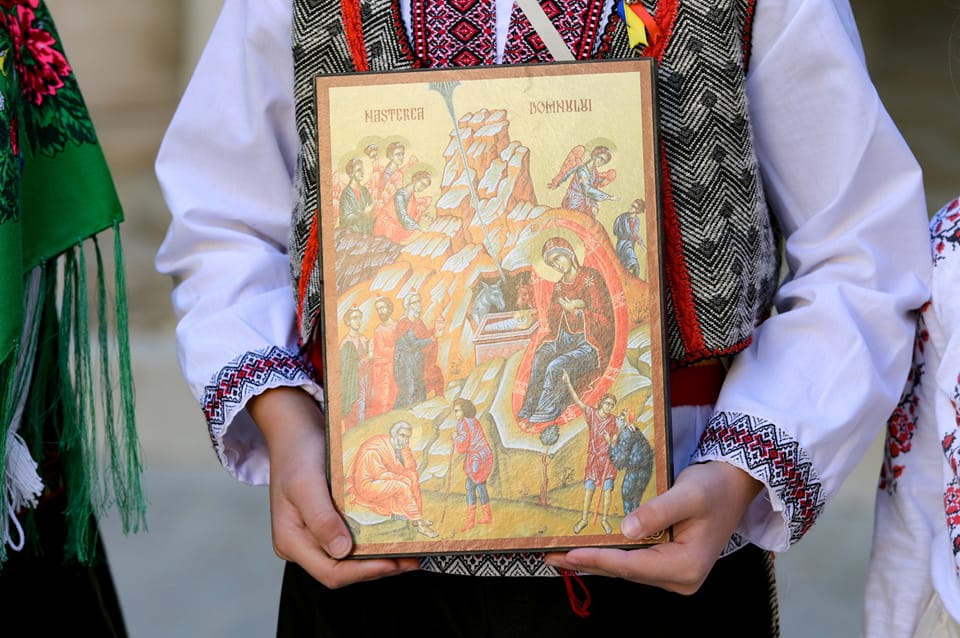
The parish also runs catechism classes for children, where the young generation — many of whom were born in Malta and have never lived in Romania — learn not only the Orthodox faith, but also Romanian history, language, and traditions. In this way, the parish fulfills a dual mission: keeping the flame of faith alive, and keeping the memory of a people and their civilization alive in the hearts of their children.
From the Apostle Andrew preaching among the Dacians, to the Patriarchs of Bucharest shepherding millions across every continent, to Fr. George opening the doors of St. Roque’s Church each Sunday morning in Valletta — the story of Romanian Orthodoxy is a story of faith that travels, endures, and finds a home wherever its people go.
We are grateful to be a small part of that great story.